Modernization of an industrial electrical system

PROJECT: #8842
SYSTEM REVIEW
When modernization is needed
Modernization is suitable when the existing electrical system no longer matches the real load, maintenance is difficult or the facility is expanding with new machines, lines and control points.
Old electrical panels, overloaded supplies or difficult diagnostics.
Production expansion, new machines or new technological sections.
Unclear cable routes, old connections or limited service access.
Need for better protection, automation, control points and service support.
What the solution includes
The scope depends on the current site condition, but usually includes assessment of panels, routes, supplies, control links, automation and safe replacement or expansion planning.
Technical inspection and assessment
Review of panels, routes, supplies, protections, operating modes and execution limitations.
Analysis of panels, routes and supplies
Assessment of existing connections, loads, reserves, marking and upgrade options.
Replacement or expansion of electrical panels
Rework, replacement or addition of panels, protections, components and control cabinets.
Organization of cable routes and links
Route arrangement, cabling, power lines, control links and service access.
Automation and control point integration
Adding or updating sensors, signals, control, control points and auxiliary links.
Checks, commissioning and service support
Checks of links, protections, modes, documentation and readiness for follow-up maintenance.
Services involved in modernization
Modernization usually combines several areas - panels, routes, low voltage systems, automation, installation work and service after commissioning.
Industries where modernization applies
Electrical system modernization is applicable in active production, warehouse and technological facilities where safety, reliability and service access are critical.
From system assessment to commissioning and support
Technical inspection
We review current panels, routes, supplies, machines, control points and work limitations.
Assessment of the existing system
We assess condition, load, risks, protections, marking, service access and required changes.
Replacement, expansion or rework plan
We clarify stages, scope, required panels, routes, supplies, control links and execution conditions.
Installation, cabling and checks
We execute replacement, installation, cabling, marking, connection checks, protections and modes.
Commissioning, documentation and maintenance
We prepare the system for operation, clarify service access and provide a basis for follow-up support.
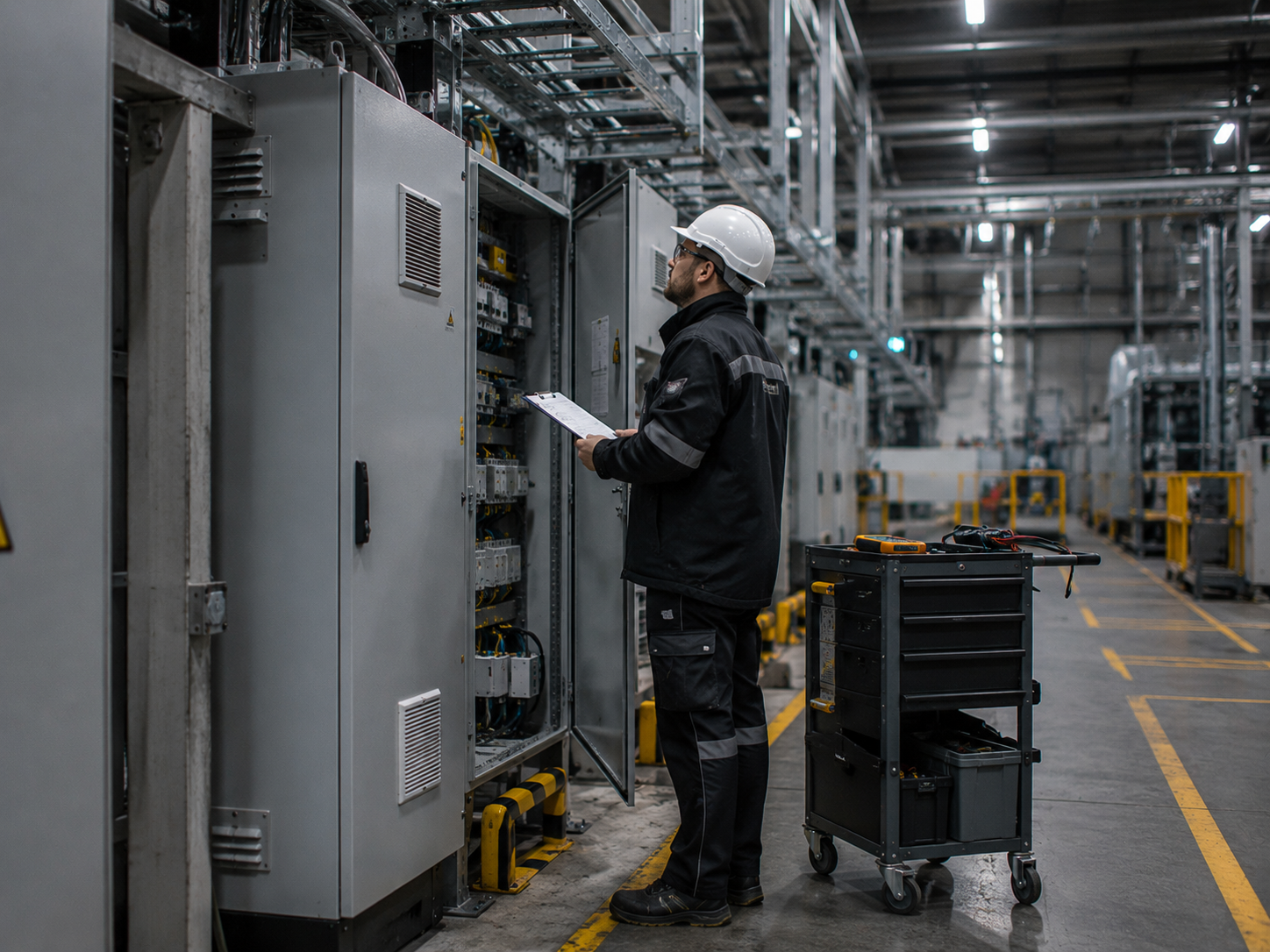
MODERNIZATION CHECK
READY FOR RENEWAL
What is planned in advance
In modernization, details matter because the system often works inside an active facility. The goal is safe change with clear structure and future expansion options.
Minimal production interruption through staged planning when site conditions allow it.
Safety, protections and clear separation of power, control and auxiliary circuits.
Clear labeling, marking and basic technical documentation.
Access for future diagnostics, prevention and service support.
Reserves for future expansion of machines, lines, panels or control points.
Coordination with operating production and site limitations.
Frequently asked questions
Short answers about initial assessment, staged work, scope and applicability for existing industrial electrical systems.
- Can modernization be done in stages?
- Yes. When site conditions allow it, the work can be planned in practical stages.
- Can old panels be reused?
- Only after technical assessment. Some systems can be reworked, while others require replacement.
- Can modernization include automation?
- Yes. Control points, sensors and process links can be included in the modernization scope.
Discuss modernization of the electrical system
Send information about current panels, routes, machines, interruptions and planned expansions. We will clarify a realistic technical scope for safe modernization.
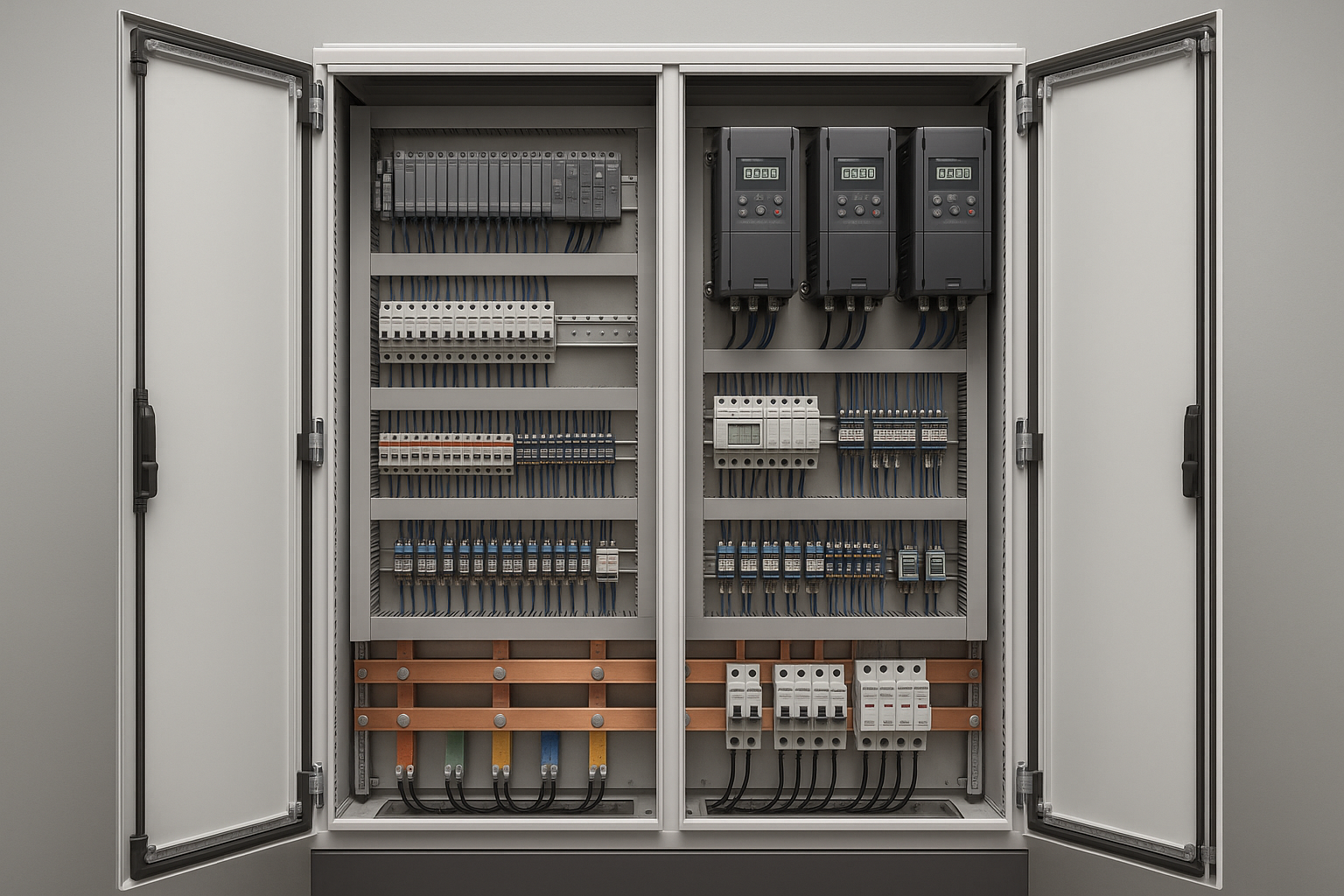
Let us plan your
electrical system.
Send the project scope and our team will review the site, system and next technical steps.
We will contact you to clarify the facility, installation conditions and expected schedule.